Hepatitis C Testing in Dallas: Who Should Test and Where
This page is general health information, not medical advice. It cannot tell you whether you have an infection. A clinician can, and the testing options on this site are a good place to start.
Hepatitis C is a virus that affects the liver. Many people who have it feel fine for years, so the only way to find out is a blood test. The good news is that hepatitis C can be cured with treatment from a clinician.
This guide walks you through getting a hep c test in Dallas, one step at a time. It covers who should test, what to bring, what the two-part testing process looks like, and which local clinics list hepatitis C testing.
Who should get a hepatitis C test?
The CDC recommends that every adult aged 18 and older get a hepatitis C test at least once in their lifetime. This is called universal one-time screening. It applies whether or not you have symptoms and whether or not you think you have any risk.
The CDC also recommends testing during every pregnancy. The U.S. Preventive Services Task Force (USPSTF) recommends screening for adults aged 18 to 79. A clinician can tell you how those recommendations apply to you.
The CDC recommends testing regardless of age or setting for some groups. These include:
- People who have ever injected drugs, even once, including a long time ago
- People with HIV
- People who received donated blood, blood products or an organ transplant before July 1992, or clotting factor concentrates made before 1987
- People who have been on long-term dialysis
- Children born to a parent with hepatitis C
- People with signs of liver disease, such as abnormal liver test results
Being on this list says nothing about your character. It only describes who benefits most from knowing their status. A hepatitis C test is a routine part of adult health care.
What you need before you start
Getting tested takes very little preparation. Here is what to gather:
- A photo ID, if you have one. Ask the clinic what it needs when you book.
- Your insurance card, if you have insurance. Several Dallas clinics also use sliding scale fees, which means the price depends on income and household size.
- A short list of dates and questions. Write down any past hepatitis tests, any procedures or exposures you want a clinician to know about, and anything you want to ask.
- A phone or calendar to book the appointment and to note when results should arrive.
- A list of your current medicines, so a clinician can plan treatment safely if you ever need it.
You do not need to fast for a hepatitis C blood test. Ask the clinic if they plan to add other tests that have their own instructions.
Step-by-step: how to get a hepatitis C test in Dallas
Step 1: Decide which kind of visit fits you
Start by choosing between a primary care or community health center and a sexual health clinic. A health center can fold a hepatitis C test into a routine visit. A sexual health clinic can often test for several infections at once. Either path can work for the one-time screening the CDC recommends.
If you also want other STI tests, see our guide to STD testing in Dallas and what it costs. Hepatitis C is often spread through blood, and the CDC notes it can be spread through sex less commonly. That is why it sometimes comes up in sexual health visits.
Step 2: Pick a clinic and check what it offers
These Dallas options are listed with hepatitis C testing. Always confirm details by phone before you go, because hours and services can change.
- Sexual Health Clinic, Dallas County Health and Human Services (DCHHS). The county page lists hepatitis C testing at 2377 N. Stemmons Freeway, 1st Floor, Suite 100, Dallas, TX 75207. The phone is (214) 819-1819. Appointments are required, and same-day or next-day appointments are offered. The county says routine testing without symptoms is directed to the DCHHS Mobile Medical Unit, so ask about that when you call. The county page does not list fees. Hours on the county page are Monday, Tuesday, Thursday and Friday 8:00 a.m. to 4:00 p.m., and Wednesday 10:00 a.m. to 6:00 p.m. The phone line opens at 7:45 a.m., and the clinic closes at 3:30 p.m. on the second Thursday of each month.
- Parkland Health, Southeast Dallas Health Center. The CDC GetTested listing shows hepatitis C testing at 9202 Elam Rd, Dallas, TX 75217, phone (214) 266-1600. The listing says insurance, Medicaid and sliding scale are accepted. It does not list walk-in service, so call to ask about booking.
- Neighborhood Medical Center. The CDC GetTested listing shows hepatitis C testing at 5917 Belt Line Rd, Dallas, TX 75254, phone (972) 726-6464. It lists insurance and a sliding scale, and says an appointment is not required.
- Resource Center Health (Nelson-Tebedo clinic). The Resource Center page lists a hepatitis A, B and C panel for $100, at 2603 Inwood Rd., Dallas, TX 75235, phone 214.528.2336. The page does not mention a sliding scale or insurance, so ask about both. It says to request an appointment online.
For a wider list of places, see the local testing list. You can also use the CDC's GetTested locator to look for sites near any Dallas ZIP code.
Step 3: Book the visit and ask three questions
When you call or book online, ask these questions:
- Do you offer hepatitis C testing, and what does the visit cost for someone in my situation?
- If the first test is reactive, can you run the follow-up test on the same blood sample, or do I need a second draw?
- If I need treatment, do you prescribe it, or will you refer me?
Question three matters. Knowing the answer in advance helps you avoid a gap between a result and a plan.
Step 4: Have your blood drawn
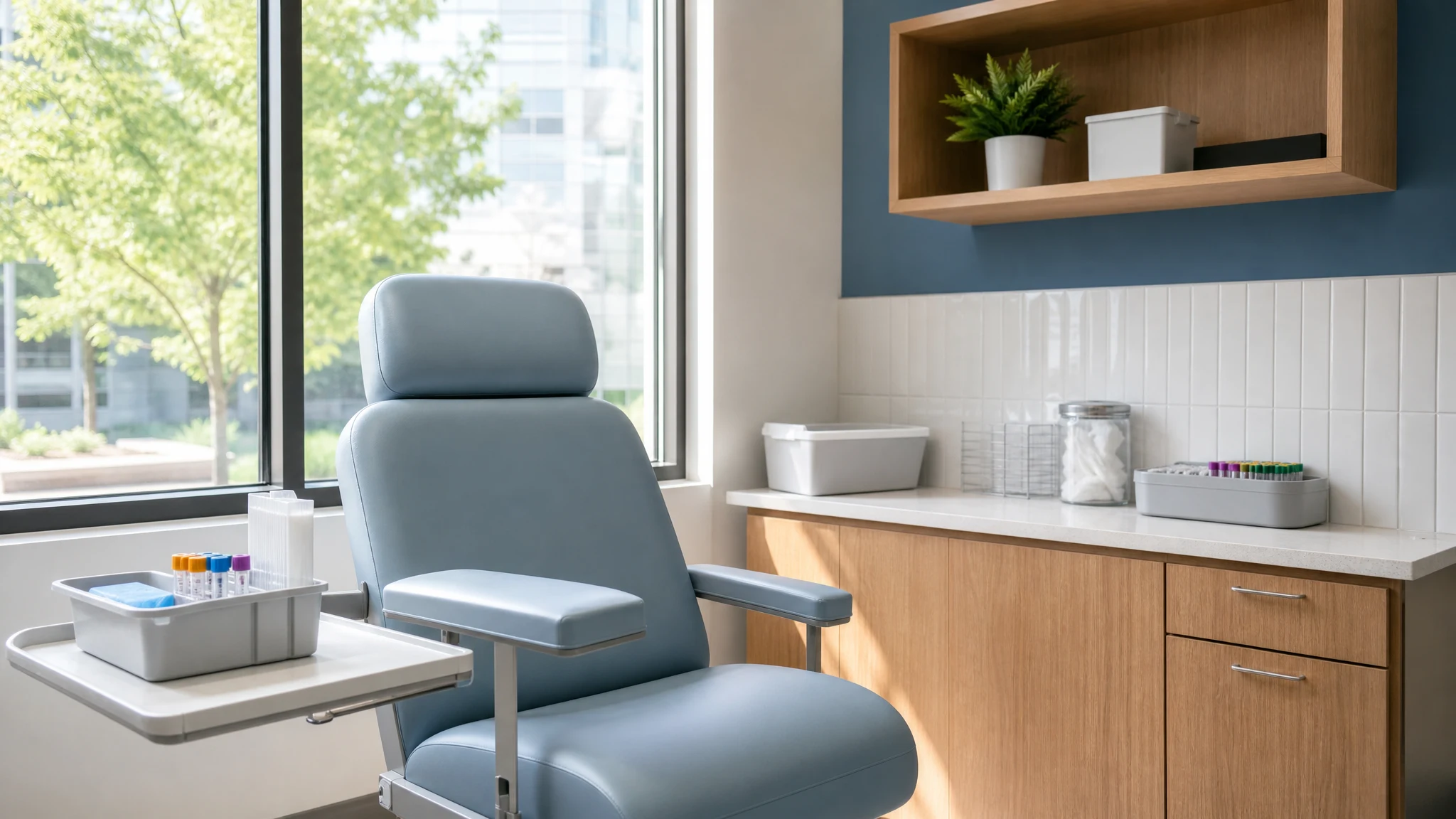
At the visit, a staff member will usually ask a few health questions and then take a small blood sample, often from a vein in your arm. The draw takes only a few minutes. Tell the clinician if needles make you anxious. They can help you stay comfortable.
Step 5: Understand the two-part testing process
The CDC recommends a two-step approach, and it helps to know the names so you can follow what the clinic says.
- The antibody test (the first hep c test). This checks whether your body has made antibodies to the hepatitis C virus. The CDC describes a reactive result as meaning you have been exposed at some point. It does not tell a clinician whether the virus is in your body now.
- The RNA test (a nucleic acid test). If the antibody test is reactive, the CDC recommends a follow-up test that looks for the virus itself. This is how a clinician learns whether the infection is current.
The CDC recommends that a reactive antibody result be followed by an RNA test. Many labs can do this from the same sample, which saves you a second needle stick. Ask your clinic whether it does this.
If you may have been exposed recently, tell the clinician. The CDC says timing can affect how tests perform, and a clinician can decide whether and when to repeat a test. The CDC hepatitis C pages list the current guidance on testing after a recent exposure.
Step 6: Ask how and when you will get results
Before you leave, ask how results are shared (phone, patient portal or a return visit) and how long it usually takes. Write down the answer. If you have not heard by that date, call the clinic. Do not assume silence means anything.
Step 7: Plan your next step based on the result
What happens next depends on the result, and a clinician will walk you through it.
- If the antibody test is non-reactive, a clinician can explain what that means for you and whether a repeat test makes sense based on any recent exposure.
- If the antibody test is reactive, the next step is the RNA test described above.
- If the RNA test finds the virus, a clinician can talk with you about treatment. The CDC says hepatitis C can be cured with oral medicines, and that these cure most people who take them as prescribed. A clinician decides which medicine is right for you and how long to take it.
What results might look like
No test is perfect, so the language below is deliberately hedged.
- A non-reactive antibody result suggests that antibodies were not found in that sample. A clinician can tell you whether anything else is needed.
- A reactive antibody result suggests past or current exposure. It is a reason for the follow-up RNA test, not a final answer.
- An RNA test that detects the virus points to a current infection. An RNA test that does not detect the virus after a reactive antibody result may suggest the body cleared the virus or that the infection is no longer active. A clinician will interpret it with your history.
These are general descriptions. Only a clinician reviewing your results can tell you what they mean for you.
Tips that make the process easier
- Ask about the mobile unit. The DCHHS page directs routine testing without symptoms to its Mobile Medical Unit. Call (214) 819-1819 to ask where it will be and how to book.
- Bundle your tests. If you want other screening, ask whether it can happen in the same visit. Our page on chlamydia testing and treatment in Dallas explains one common add-on.
- Ask about cost in plain terms. Say, "I may not have insurance. What are my options?" Prism Health North Texas, Foremost Family Health Centers, Parkland and Neighborhood Medical Center all list sliding scale fees in their published information, though not every site lists hepatitis C testing, so confirm first.
- Bring someone if it helps. A friend can wait with you or help you remember the plan.
- Keep a copy of your result. A one-time screening is only one-time if you can show it was done.
Common mistakes to avoid
- Waiting for symptoms. The CDC notes many people with hepatitis C have no symptoms for a long time. Testing is based on recommendations, not on how you feel.
- Stopping after a reactive antibody result. That result is the first half of the process. The follow-up RNA test is what shows whether the virus is present now.
- Assuming a sexual health panel includes hepatitis C. Many do not. Ask for it by name. The free at-home kit offered through Test for Texas (testfortexas.org) is described by the Texas Department of State Health Services (DSHS) as covering HIV, syphilis, gonorrhea and chlamydia. It does not list hepatitis C, so a clinic visit is the route for this test.
- Skipping repeat testing when exposure continues. The CDC says people with ongoing risk may need testing more often than once. A clinician can set a schedule that fits your situation.
- Delaying a call about cost. Fees are the most common reason people put off testing. A short call usually clears it up.
Privacy and young people
Under Texas Family Code Sec. 32.003, a minor of any age may consent to diagnosis and treatment of a reportable infectious or communicable disease, and parent or guardian consent is not necessary for that care. The statute also allows a physician to tell a parent or guardian about the treatment, so a provider cannot promise they will never do so. Ask the clinic about its approach before you book. If you are under 18, also ask what the clinic requires, since some clinics have their own consent rules.
What about cost and local numbers?
Prices vary, and several clinics do not publish them for hepatitis C testing. The only published figure in our research is the Resource Center's $100 hepatitis A, B and C panel. For every other site, check with the clinic or with Dallas County Health and Human Services before you go. Local hepatitis C case counts are not part of the public figures cited here, so this page does not quote any. The CDC and DSHS publish hepatitis surveillance data if you want to look at state trends.
Where to start today
Pick one clinic from the list above and make the call. If you are not sure where to begin, Dallas County Health and Human Services at (214) 819-1819 can explain its appointment and mobile unit options. The CDC's GetTested locator can also point you to free or low-cost sites.
One test, taken once, is the CDC's baseline for every adult. Because hepatitis C can be cured, finding out is worth the short visit.
Sources
- CDC, Hepatitis C (testing recommendations and treatment information)
- CDC GetTested: National STD, HIV and Hepatitis Testing Locator
- Dallas County Health and Human Services, Sexual Health Clinic
- Resource Center, HIV and STI Testing
- CDC GetTested listing: Parkland Health
- CDC GetTested listing: Neighborhood Medical Center
- Texas DSHS, Free At-Home HIV and STD Testing
- Texas DSHS, HIV and Texas Law
- Texas Family Code Sec. 32.003 (consent of a minor to medical care)
- U.S. Preventive Services Task Force, Hepatitis C Virus Infection in Adolescents and Adults: Screening